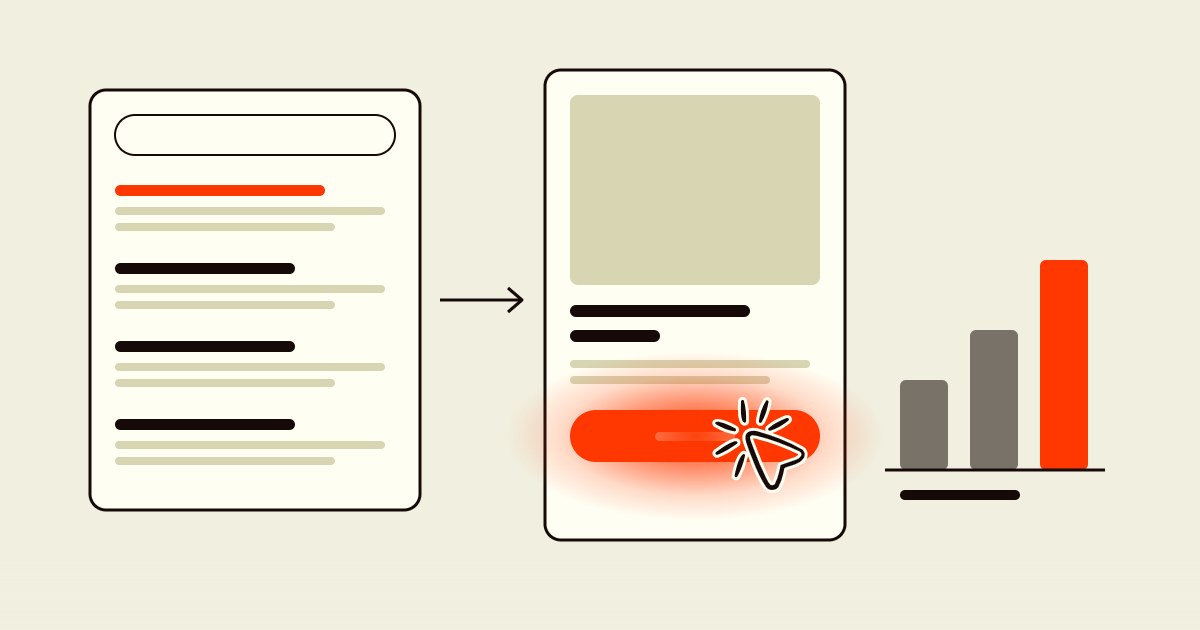
SEO and CRO answer different questions. SEO decides how many qualified shoppers reach your store; CRO decides how much each of them is worth. Across 350+ DTC audits, Glued finds most brands that feel stuck are conversion-constrained, not traffic-constrained: sending more visitors to a store that converts poorly just makes the same problem more expensive. The way to tell which one you have is revenue per visitor, and the answer is usually to fix conversion first while protecting the search traffic you already have.
- Work out revenue per visitor and compare it with what a visit costs. If more traffic loses money, conversion comes first.
- SEO comes first when there's too little traffic to learn from, conversion is already healthy, or buyers research for weeks before buying.
- Speed, mobile experience and helpful content serve both. Run tests the way Google recommends so CRO never costs you rankings.
"It depends" is the usual answer to SEO vs CRO, and it's true but not useful. What it depends on is something you can measure this week with numbers you already have.
Is your store short on traffic or short on conversion?
Start with revenue per visitor: monthly revenue divided by monthly sessions. It combines conversion rate and order value into one number, and it tells you what a visit is worth.
Take a store with 20,000 sessions and $30,000 in monthly revenue. Revenue per visitor is $1.50. Grow traffic 20% and revenue goes up about $6,000, but you pay for every extra visit, in ad spend or content. Lift revenue per visitor 20% and revenue goes up the same $6,000 with no extra traffic, and every visitor you add later is worth more.
Then run the break-even test. If that store pays $1.20 per paid visit and keeps 50% gross margin, each visit returns $0.75 in gross profit. Every additional paid visit loses $0.45. Buying more traffic makes the business worse, so conversion has to come first.
Two patterns show up in Glued's audits:
- Traffic-constrained: visits are profitable and the site converts reasonably, but there aren't enough visitors to grow revenue or to run tests that reach a result. SEO and content are the priority.
- Conversion-constrained: traffic arrives from ads, email and search, but too few visitors buy, so acquisition costs keep rising to hit the same targets. CRO is the priority. This is the more common pattern, at every traffic level.
If you're not sure where in the funnel shoppers drop out, map it first with Glued's website conversion funnel framework.
Why does CRO usually come first?
Because conversion multiplies everything that comes after it. A higher revenue per visitor makes every future visit from search, ads and email worth more, so SEO done after conversion work pays back faster than the same SEO done before it.
Skin At Work, a San Francisco skincare brand, is the clearest example in Glued's work. Its return on ad spend had slid from 2.0 to 0.6, and the pressure was to spend more to hit revenue targets. The traffic wasn't the problem; what happened after the click was. Glued tested "FREE" against "Just Pay for Shipping" messaging (perceived value won), made the blog easier to reach from navigation, footers and slide-outs so skeptical buyers could learn before buying, and built a dedicated BFCM bundles page. Conversion rate rose 407%, ROAS went from 0.6–0.75 to 1.35, average order value rose 39%, and advertising spend fell 87% (Shopify analytics, 2024).
The 87% cut in ad spend is the point. When a site converts, you need less traffic to hit the same revenue, not more. Once that is true, SEO traffic is pure upside instead of another way to fill a leaky funnel.
When should SEO come first?
There are real exceptions, and they're worth taking seriously:
- Too little traffic to learn from. A/B tests need a few hundred conversions per variant to give a reliable answer. If the whole store gets a few hundred orders a month, tests take too long, and building traffic is the better use of budget. You can still fix obvious conversion problems directly without testing them.
- Healthy conversion, low ceiling. If visits are already profitable and the site converts well for its category, there's little to fix. Traffic is the constraint, and SEO is the lever.
- Buyers research before they arrive. In high-consideration categories (wellness, technical products, expensive purchases), shoppers read for weeks before buying. Content that ranks for those questions does conversion work before the click, so SEO and CRO become the same investment.
Where do SEO and CRO overlap?
The most useful work often helps both, which is why "vs" is the wrong frame for much of it:
- Speed. Google uses Core Web Vitals as part of page experience, and slow pages lose shoppers. Faster templates help rankings and conversion at once.
- Mobile experience. Google indexes the mobile version of your pages, and for most DTC stores phones bring most of the sessions. DR-HO's rebuilt its experience for buyers over 50, with larger tap targets and clearer pages; conversion rate rose 122% and net sales 212% (Shopify analytics, 2024).
- Helpful content. Content that answers real buyer questions ranks and reassures. Skin At Work's education-first approach is the example: in Glued's skincare work, shoppers who read educational content converted at three times the rate of those who didn't.
- Structured data. Product, review and FAQ markup can earn richer search results and show shoppers prices, ratings and answers before they click.
How do you run CRO without hurting SEO?

Google's own guidance on A/B testing and Search is short:
- Don't cloak. Show Googlebot the same versions users can see.
- Canonicalize variant URLs. If a test uses separate URLs, each variant should carry a rel="canonical" pointing to the original.
- Use 302 redirects for redirect tests, not 301s, so the original URL stays indexed.
- End tests when they have a result. Ship the winner and remove the test scripts and alternate URLs.
Two more rules from Glued's own work: when a test changes a ranking page, keep its URL, title and the content that ranks; and when shipping the winner, check that tracking and structured data survived. For the testing method itself, see A/B testing for eCommerce.
What order works for most DTC brands?
- Months 1 to 3: fix conversion. Audit the funnel, ship the obvious fixes directly, and start testing the bigger questions. Measure revenue per visitor before and after. Keep technical SEO healthy throughout.
- From month 2: build the SEO base. Start content and technical SEO while conversion work is underway, so organic traffic begins growing just as the site gets better at converting it.
- From month 4: scale traffic. With known conversion economics, more traffic from search, ads or email becomes predictable. You know what a visit is worth before you pay for it.
A quick way to decide where to start:
- Start with CRO if paid visits cost more than the gross profit they return, ROAS is falling while creative and targeting are steady, or revenue per visitor is flat.
- Start with SEO if traffic is too low to test, visits are already profitable, or your buyers research for weeks before purchasing.
- Run both if you have the budget for two workstreams, or the work is shared: speed, mobile and helpful content.
For the full CRO picture, read Glued's complete guide to conversion rate optimization. To see where shoppers stall on your own pages, website heatmap analysis shows how to read the data. To put a figure on your own gap, use Glued's ROI calculator, or start with a free audit of your store.
FAQ
Should I stop SEO while I focus on CRO?
No. Keep the technical basics healthy (indexing, site structure, speed) and protect the pages that already rank. What you can pause is new content production and link building while conversion work gets the budget. Ranking pages also need protecting during CRO changes: keep their URLs, titles and core content.
How do I know whether I have a traffic problem or a conversion problem?
Divide monthly revenue by monthly sessions to get revenue per visitor, then compare it with what a visit costs you. If a visit from paid media costs more than the gross profit it brings in, more traffic loses money and conversion comes first. If visits are profitable but there simply aren't enough of them, traffic is the constraint.
Can A/B testing hurt my SEO?
Not if it's set up properly. Google's guidance is to show Googlebot the same thing users see (no cloaking), put a rel="canonical" pointing to the original on any variant URLs, use 302 rather than 301 redirects for redirect tests, and remove the test once it has a result.
How long do SEO and CRO take to show results?
Direct CRO fixes (clearer shipping costs, express payment above the form, better mobile inputs) can move revenue within weeks. Tested changes take longer, because each test needs enough conversions to be trusted. SEO usually takes months to move rankings and longer to build meaningful organic traffic, which is why brands under revenue pressure tend to start with conversion.
How does Glued decide which to prioritize for a new client?
With an audit that looks at both. It maps where shoppers drop out of the funnel and where the site is missing search demand, then puts a revenue figure on each. For most DTC brands the conversion leaks are easier to see and faster to fix, but the audit decides, not a default.
Get A Free Website Audit.
We’ll identify what’s leaking revenue on your site and show you how to fix it. The free audit includes: